
How to Tell If Your Air Conditioning Unit Is Overworking
Why an Overworked Air Conditioning Unit Is Worth Taking Seriously
An air conditioning unit that is pushing too hard to keep up is not just an inconvenience - it is a sign that something needs attention. Left alone, an overworking system will wear components faster, drive up electricity bills, and eventually fail at the worst possible moment. In Bury St Edmunds, where a run of warm summer days can push temperatures inside homes and offices well above comfortable levels, units that were only ever sized for occasional use can find themselves running almost constantly.
The good news is that the warning signs are usually clear if you know what to look for. Below are the most reliable ones.
Five Signs Your Air Conditioning Unit Is Struggling
1. It Runs Almost Continuously Without Reaching the Set Temperature
A properly sized and maintained unit should cool a room to the thermostat setting and then cycle off. If yours runs for hours and the room stays stuffy or warm, it is working harder than it should. The cause is often insufficient refrigerant, a dirty air filter, or a unit that was never quite the right size for the space.
2. Unusual Noises
Rattling, grinding, hissing or a persistent high-pitched squeal are not normal operating sounds. A rattle often points to a loose component or debris in the outdoor unit. Hissing can indicate a refrigerant leak - which must only be investigated by an engineer holding F-gas certification from an approved body such as Refcom, as handling refrigerant without the correct certification is a legal requirement under UK F-gas regulations.
3. Warm or Weak Airflow From the Indoor Unit
If the air coming out feels barely cooler than the room, the system is losing efficiency. Blocked filters are a common culprit and are easy to check - most indoor units have a washable mesh filter behind the front panel. Beyond that, low refrigerant or a failing compressor can cause the same symptom and will need a qualified engineer to diagnose properly.
4. Ice or Frost on the Unit
It sounds counterintuitive, but ice forming on the indoor unit or refrigerant pipework is a sign the system is struggling, not working well. Restricted airflow or low refrigerant pressure causes the coil temperature to drop too far, freezing condensation on the surface. Running the unit in this condition puts serious strain on the compressor.
5. A Noticeable Spike in Electricity Use
Air conditioning draws a meaningful amount of power, but if your electricity bills have crept up noticeably during periods when you are using the unit, the unit may be working far less efficiently than it should. An inefficient system can draw considerably more power than a well-maintained one of the same capacity.
Common Reasons Air Conditioning Units Overwork
Dirty or blocked filters are among the most frequent causes - they restrict airflow across the evaporator coil and force the system to run longer cycles to achieve the same result. Filters in busy commercial premises or homes with pets may need cleaning more often than the manufacturer suggests.
Poor installation is another cause. A unit that is too small for the room it serves, or one where the pipework run was too long or poorly insulated, will struggle from day one. In older buildings in and around Bury St Edmunds - whether a Victorian terraced property or a draughty barn conversion - heat gain through single-glazed windows and poor insulation adds considerably to what the unit has to overcome.
Refrigerant loss through a slow leak is less visible but equally damaging. The system cannot cool effectively without the correct refrigerant charge, and it will compensate by running continuously. Only a certified engineer can legally recharge refrigerant and locate the source of the leak.
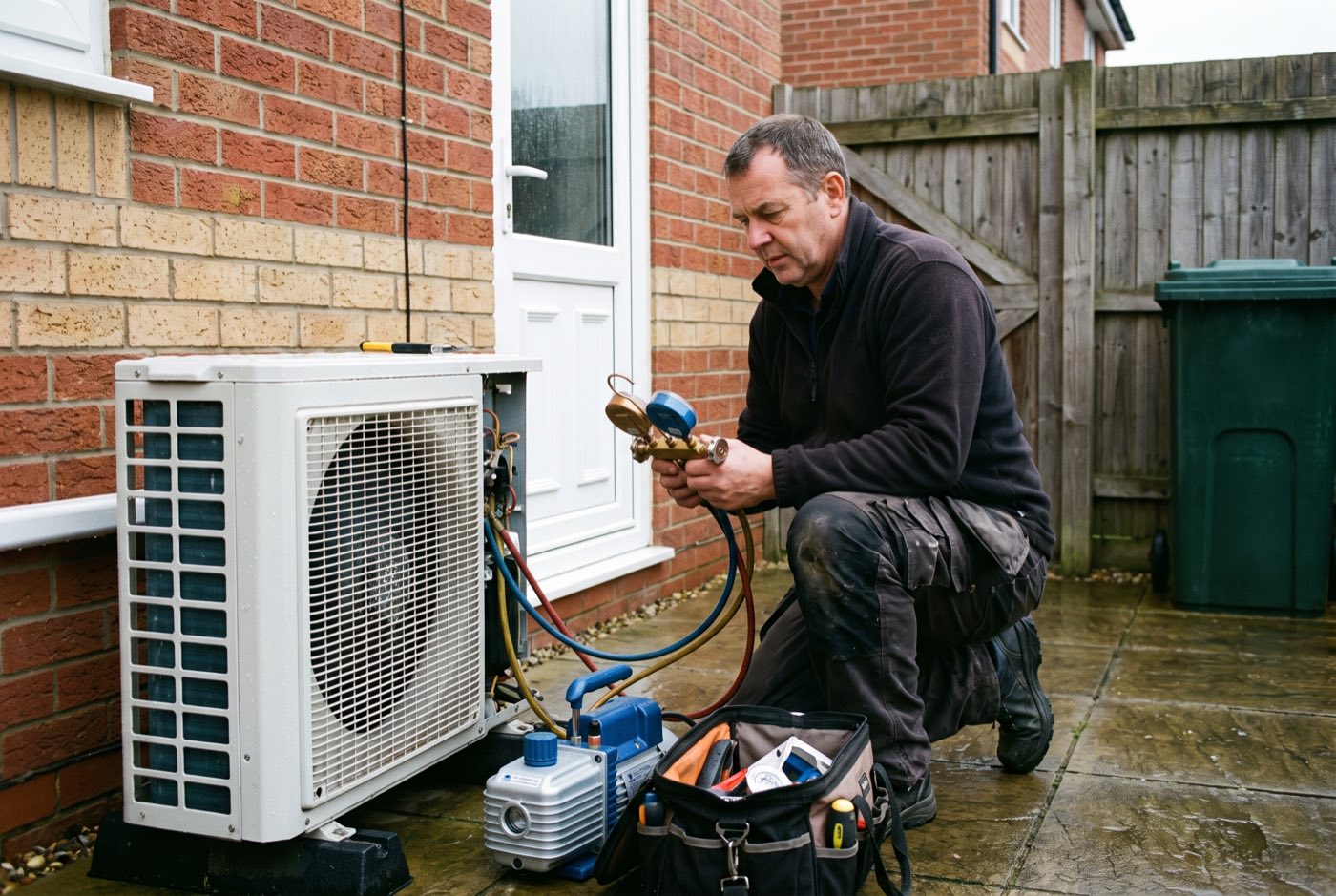
Annual air conditioning maintenance catches most of these problems before they develop into serious faults. A service visit typically includes cleaning the filters and coils, checking the refrigerant charge, inspecting electrical connections, and testing the system's performance against its rated output.
What to Do If You Recognise These Signs
Start with the simple checks: clean or replace the air filter, make sure nothing is blocking the indoor or outdoor unit, and check that doors and windows are closed while the system runs. If the problem persists after that, the unit needs a professional look.
For domestic air conditioning in a home or for air conditioning repairs in a commercial setting - a shop, office, or hospitality venue in or around Bury St Edmunds - getting the fault diagnosed early is nearly always cheaper than waiting for the compressor to fail completely. Compressor replacement is the most expensive repair on most systems; catching a refrigerant leak or a clogged coil first can prevent it entirely.
Do not attempt to top up refrigerant yourself. Under UK F-gas regulations, only engineers with the appropriate certification are permitted to handle refrigerants. Attempting it without certification is illegal and can cause serious damage to the system.
Get a Free Quote for Air Conditioning Repairs or Servicing in Bury St Edmunds
If your unit is showing any of the signs above, the team at Bury St Edmunds Air Conditioning and Refrigeration can help. We cover Bury St Edmunds and the surrounding area, including Newmarket, Sudbury, and Mildenhall. Get in touch for a free local quote and we will arrange a time to assess your system and give you a straight answer on what it needs.
A room that needs cooling properly in Bury St Edmunds?
We survey first and put the price in writing.
Related
Services in this article

Home and Domestic Air Conditioning
Split and multi-split air conditioning systems installed in homes across Bury St Edmunds and the surrounding villages.
See details
Commercial Air Conditioning
Commercial air conditioning supplied, installed and maintained for offices, retail units, restaurants and industrial premises around Bury St Edmunds.
See details
Air Conditioning Repairs
Air conditioning repairs for domestic and commercial systems in Bury St Edmunds.
See detailsMore advice
Other articles
What Is Involved in an Air Conditioning Service Visit?
A service visit covers far more than a quick clean - find out what a qualified engineer checks, why it matters and how often your system should be serviced.
Read more 19 October 2026Why Blocked Air Conditioning Filters Cause Problems in Your Home
A blocked air conditioning filter does more than reduce airflow - it can cause icing, water damage and expensive component failures. Find out what to look for and how often filters need attention.
Read more 12 October 2026Why Annual Air Conditioning Servicing Matters for UK Homeowners
Annual air conditioning servicing keeps your system running efficiently, helps you stay on the right side of UK F-gas regulations, and catches small problems before they become expensive repairs. Here is what Bury St Edmunds homeowners and business owners need to know.
Read more