
Roof Damage and Your Home Insurance: A Simple Overview
What Your Home Insurance Actually Covers for Roof Damage
Most standard home insurance policies cover roof damage caused by sudden, unexpected events. Storm damage, falling trees, fire and impact from external objects are the typical examples. What insurers will not pay for is damage caused by gradual deterioration, lack of maintenance or wear and tear over time.
This distinction matters enormously. If a Suffolk storm lifts several tiles from your roof and water gets into the loft, you should have a valid claim. If the felt underneath has quietly rotted over fifteen years and rain eventually gets through, your insurer will likely decline it on the grounds that routine upkeep was neglected.
How Suffolk's Weather Creates Real Roof Risks
Bury St Edmunds sits in one of the drier parts of the UK, but that does not mean roofs have an easy life here. East Anglia experiences biting north-easterly winds in winter, and properties on exposed ground around towns like Mildenhall and Newmarket can take a battering. Flat-roofed extensions on 1960s and 1970s semis, common across the area, are particularly vulnerable to pooling water after prolonged cold spells.
Older flint and brick properties found throughout the town centre and surrounding villages often have original clay or concrete tiles that have become brittle with age. A single severe frost can crack a tile that was already under stress, and a gust of wind finishes the job. That kind of sequential damage sits in a grey area with insurers, so knowing your policy wording is essential.
Making a Claim: What to Do Immediately After Damage Occurs
The steps you take in the first few hours after roof damage can significantly affect whether your claim succeeds.
- Document everything straight away. Photograph the damage from the ground and, where it is safe to do so, from any accessible vantage point. Date-stamped photos are useful evidence.
- Prevent further damage where you safely can. Insurers expect policyholders to take reasonable steps to limit additional loss. Placing a tarpaulin over an exposed section, for example, shows good faith and protects your interior.
- Contact your insurer promptly. Most policies require you to report damage within a set timeframe. Delaying the call gives the insurer grounds to complicate the claim.
- Get an independent inspection report. Ask a qualified roofer to put their findings in writing. The National Federation of Roofing Contractors can help you find a registered contractor who will produce a report that stands up to scrutiny.
- Keep all receipts. Emergency repair costs, temporary accommodation if the property becomes uninhabitable, even the cost of the tarpaulin can often be reclaimed.
Common Reasons Insurers Reject Roof Claims
Rejection usually comes down to one of a small number of issues. The most frequent is that the insurer's loss adjuster concludes the roof was already in poor condition before the event occurred. A roof that has not been inspected or maintained in many years can be hard to defend.
A claim can also be declined if the damage is below your excess, if the policy excludes certain types of flat roof coverings, or if your property was left unoccupied for longer than your policy allows. Always read the unoccupied property clause carefully, particularly if you own a holiday let or commercial premises in towns like Sudbury or Brandon.
If you feel a decision is unfair, you can escalate to the Financial Ombudsman Service at no cost to you. Many disputed claims are resolved this way.
Keeping Your Roof in Good Shape Protects Your Cover
Proactive maintenance is the strongest argument you can make to an insurer that any damage was sudden rather than long-standing. An annual inspection, clearing gutters every autumn and repointing any crumbling mortar around chimney stacks are straightforward tasks that keep your roof honest.
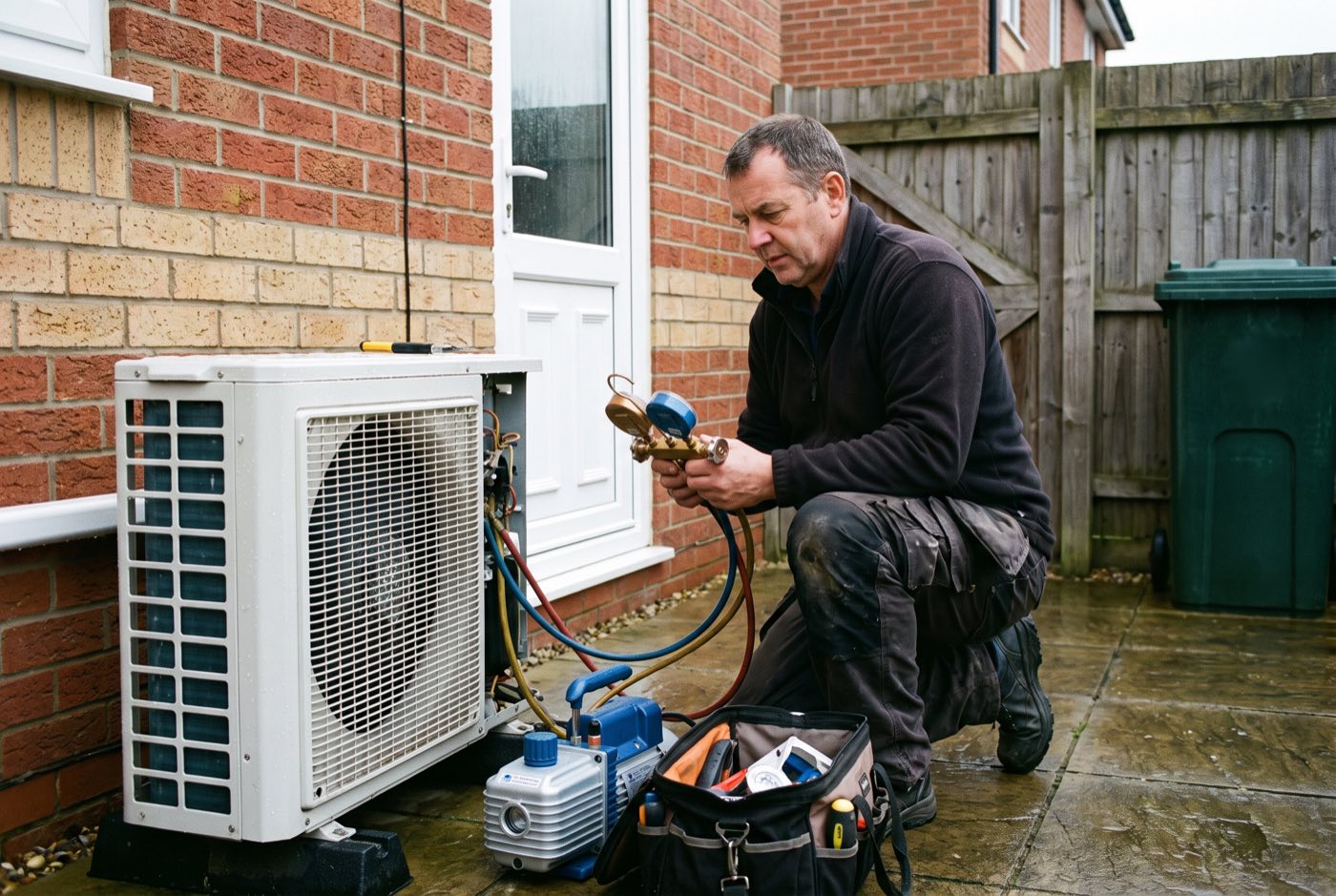
If your home has an air conditioning or heat pump system installed, it is worth checking periodically that any roof penetrations, cable runs or condensate lines have not disturbed flashings or allowed water ingress around fixings. Our air conditioning maintenance visits often include a visual check of the installation's external components, and we will flag anything that looks like it could cause a problem. Properties with air source heat pumps sometimes have refrigerant pipework routed externally, and the points where that pipework enters the building need to be sealed and checked regularly.
Roof health and the systems installed on or near it are more connected than many homeowners realise. Staying on top of both keeps your home protected and your insurance position solid.
Get a Free Local Assessment
If you are concerned about roof penetrations, external fixings or condensate routing connected to your air conditioning or heat pump system in or around Bury St Edmunds, we are happy to take a look. Contact us to arrange a free local site visit and we will give you an honest assessment with no obligation.
A room that needs cooling properly in Bury St Edmunds?
We survey first and put the price in writing.
Related
Services in this article

Home and Domestic Air Conditioning
Split and multi-split air conditioning systems installed in homes across Bury St Edmunds and the surrounding villages.
See details
Commercial Air Conditioning
Commercial air conditioning supplied, installed and maintained for offices, retail units, restaurants and industrial premises around Bury St Edmunds.
See details
Air Conditioning Repairs
Air conditioning repairs for domestic and commercial systems in Bury St Edmunds.
See detailsMore advice
Other articles
What's Involved in a Flat Roof Replacement?
A flat roof replacement involves more than laying new material - from stripping rotten decking to upgrading insulation and correcting drainage falls. This guide explains the process, typical costs and the material choices available to homeowners in Bury St Edmunds.
Read more 14 September 2026What Causes a Leaking Roof? Common Reasons Explained
A leaking roof is rarely random - there is almost always a specific, fixable cause. This guide explains the most common reasons roofs leak on UK homes, with practical advice for homeowners in Bury St Edmunds.
Read more