
What Are the Different Types of Air Conditioning Systems for Homes?
Why the Right System Makes All the Difference
Choosing an air conditioning system is not simply a case of picking the cheapest unit on the shelf. The type of property, how it is used, and how much disruption you can tolerate during installation all point towards different solutions. In Bury St Edmunds, where Victorian terraces sit alongside modern retail units and converted farm buildings, there is rarely a one-size-fits-all answer.
This guide walks through the main types of air conditioning systems available in the UK so you can make an informed decision before you speak to a specialist.
Split Systems: The Most Popular Choice for Homes and Small Offices
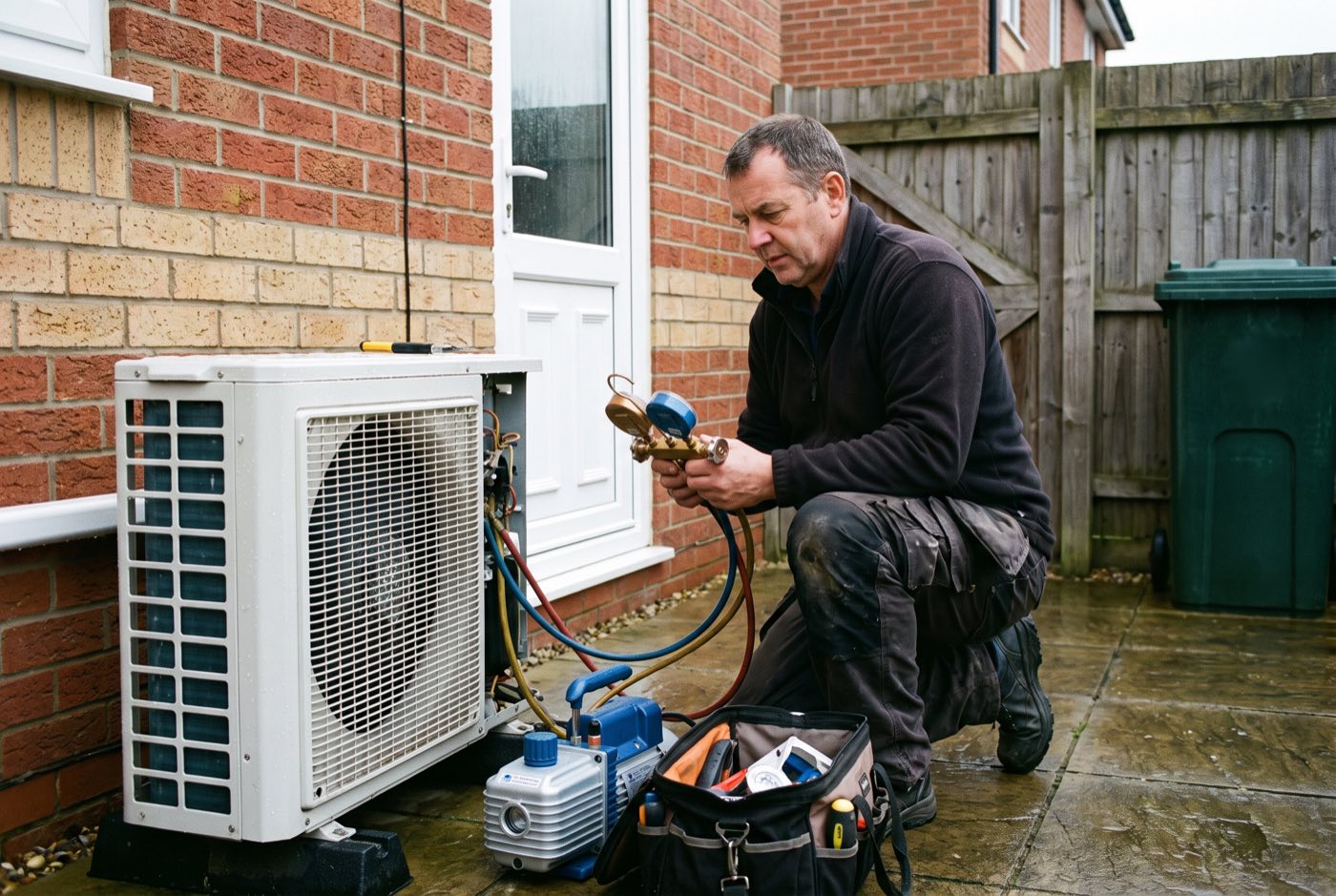
A split system consists of an indoor unit mounted on a wall and an outdoor unit fixed to an exterior wall or on the ground. Refrigerant pipework connects the two through a small hole drilled in the wall. Because the noisy compressor sits outside, the indoor unit runs quietly, which makes split systems well suited to living rooms, bedrooms, and small office spaces.
Single split systems serve one room from one outdoor unit. They are straightforward to install and are the most cost-effective starting point for a typical semi-detached or detached home. Running costs are kept in check because you only cool or heat the space you are actually using.
Multi-split systems connect two or more indoor units to a single outdoor unit. This arrangement is useful when you want air conditioning in several rooms but cannot accommodate multiple outdoor units, perhaps because of limited external wall space or planning considerations. Always check with your local planning authority before installing an outdoor unit, as permitted development rules vary.
Ducted Systems: Discreet Cooling Throughout an Entire Building
A ducted system hides the main unit in a ceiling void or roof space and distributes conditioned air through a network of ducts with small grilles in each room. Because nothing is visible except the grilles, ducted systems are popular in new-build properties and open-plan commercial spaces where aesthetics matter.
The trade-off is cost and disruption. Installing ductwork in an existing property means working inside ceilings and walls, so ducted systems are most practical during a refurbishment or new build. In Bury St Edmunds, older town-centre buildings with limited ceiling depth may not suit a full ducted installation, but a qualified installer can assess what is possible.
For larger premises, commercial air conditioning using ducted or ceiling cassette units is often the most efficient way to maintain a consistent temperature across a whole floor.
Portable and Window Units: Temporary Rather Than Long-Term
Portable air conditioners require no installation and can be moved from room to room, which makes them appealing for renters or anyone who needs a quick fix during a hot Suffolk summer. However, they are significantly less efficient than split systems, generate more noise, and need a hot-air exhaust hose vented through a window or vent, which limits how well you can seal the room.
Window units are rare in the UK because most British window styles are not suited to them. They are also less energy-efficient than modern inverter-driven split systems. For anything beyond a short-term or emergency solution, a properly installed system will serve you far better.
Air Source Heat Pumps: Cooling and Heating in One Unit
An air source heat pump works on the same refrigeration principle as a standard air conditioning system but is designed to provide both cooling in summer and efficient heating in winter. For homeowners in the Bury St Edmunds area looking to reduce reliance on gas, a heat pump can replace or supplement a traditional boiler while also keeping the property cool during warmer months.
The efficiency of a heat pump is measured by its coefficient of performance. In heating mode, a well-sized unit typically delivers more energy in heat than it consumes in electricity, making it a genuinely practical option for well-insulated modern homes. Find out more about air source heat pumps and whether your property is suitable.
What to Check Before You Buy Any System
Regardless of which system interests you, a few practical points apply to every installation in the UK.
- F-gas rules apply. Any system containing refrigerant must be installed and serviced by an engineer who holds F-gas certification as required by UK legislation. Never allow an unqualified person to handle refrigerant.
- Sizing matters. An undersized unit will run continuously without reaching the target temperature. An oversized unit will short-cycle and wear out faster. Proper heat-load calculations are essential.
- Maintenance keeps efficiency up. Filters, coils, and drainage need regular attention. Neglected systems use more electricity and are more likely to break down. Air conditioning maintenance on a regular schedule protects your investment.
- Planning permission. Outdoor units may require consent in conservation areas or listed buildings. Check with West Suffolk Council before proceeding.
For home and domestic air conditioning advice specific to your property type, or for a free local quote covering Bury St Edmunds and the surrounding area, get in touch with our team and we will recommend the right system for your situation.
A room that needs cooling properly in Bury St Edmunds?
We survey first and put the price in writing.
Related
Services in this article

Home and Domestic Air Conditioning
Split and multi-split air conditioning systems installed in homes across Bury St Edmunds and the surrounding villages.
See details
Commercial Air Conditioning
Commercial air conditioning supplied, installed and maintained for offices, retail units, restaurants and industrial premises around Bury St Edmunds.
See details
Air Conditioning Repairs
Air conditioning repairs for domestic and commercial systems in Bury St Edmunds.
See detailsMore advice
Other articles
Air Conditioning for a Home Office: What UK Homeowners Need to Know
Working from home in Bury St Edmunds? Find out how to choose, install and maintain air conditioning for a home office, including UK regulations and what to ask any installer.
Read more 21 September 2026Floor-Standing vs Wall-Mounted Air Conditioning: Which Is Right for Your Home?
Not sure whether a floor-standing or wall-mounted air conditioning unit is right for your home or business? This guide explains the differences, costs and which suits typical Bury St Edmunds properties.
Read more 14 September 2026Why Does My Air Conditioning Smell Unpleasant When Switched On?
An unpleasant smell from your air conditioning unit usually points to mould, bacteria, dust or a refrigerant issue. This guide explains the most common causes and what to do about them.
Read more